
Originally from the Midwestern United States, Taylor began learning Chinese after a business trip to Hangzhou sparked her fascination with the written language. That curiosity took her from night classes in Los Angeles to full-time study in Taiwan, where she reached TOCFL Level 5 (C1), completed a master’s degree at NTNU, and built a career as a Mandarin–English linguist in localization and media.
In this interview, Taylor reflects on the discipline and mindset required to move from intermediate to advanced Mandarin, the role of immersion and character writing in achieving true fluency, and how living and studying in Taiwan reshaped her understanding of language, culture, and herself.
Can you introduce yourself and tell us a little about your background?
I grew up in the Quad Cities, a metro area in the midwestern United States, on the border between Iowa and Illinois. I’ve worked as a Mandarin-English linguist in the localization industry since late 2019. Most of my work centers around audiovisual texts, such as mobile games, television, and film.
Believe it or not, before working as a linguist, my first career was as a design and pre-production coordinator in the apparel industry. While working for a brand in Los Angeles, California, I had opportunities to visit Hangzhou and other major Chinese cities for regular business trips. On my first day in Hangzhou, I took a van ride to a factory. Looking out the window at all the street signs in Mandarin, I was completely mesmerized by the aesthetics of the written language. I knew at that moment that I wanted to learn Mandarin.
Can you walk us through your Chinese learning journey from the beginning to where you are now?
Starting in 2016, I took night classes twice per week at a language academy in Los Angeles. I did that for about six months, but I was progressing very slowly. Then, while attending a friend’s wedding in 2017, I learned that one of the groomsmen had received a scholarship to study Mandarin full time in Taiwan. That sounded pretty great to me! He was very generous and shared a lot of resources.
I applied and eventually received a 9-month Huayu Enrichment Scholarship. In August 2018, I moved to Taiwan to take intensive classes for one year at National Taiwan Normal University’s (NTNU) Mandarin Training Center (MTC). I attended class for three hours each day and studied the recommended six hours per day outside of class. On weekends, I consumed cultural products like TV dramas to improve my listening skills and cultural understanding. This regimen helped me achieve TOCFL Level 3 by April 2019 (roughly equivalent to CEFR Level B1).
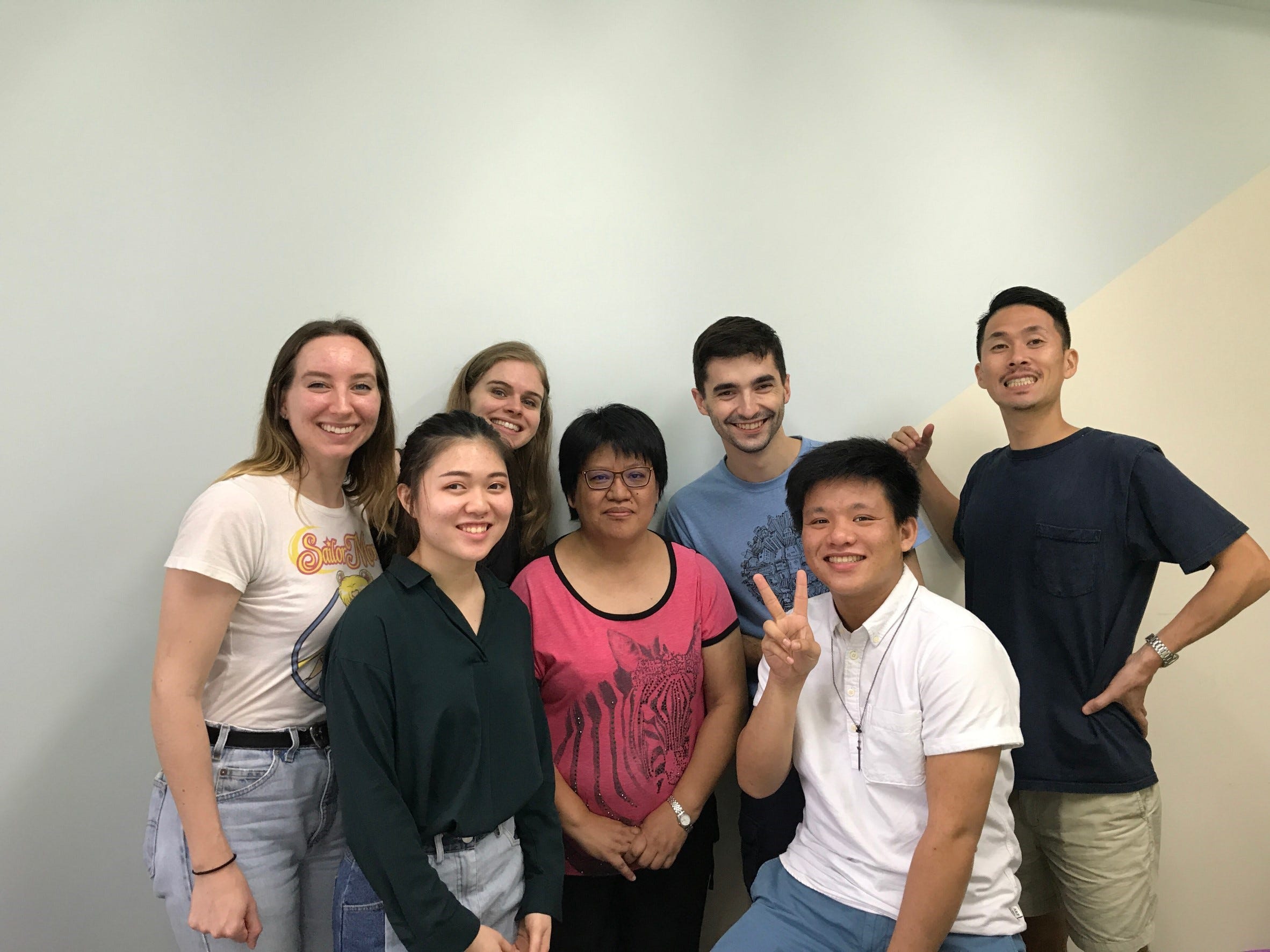
Since starting, my goal has been to achieve near-native fluency, so I knew one year would not be enough. I stayed at the MTC for two years, and by January 2020, I achieved TOCFL Level 5, an advanced level equivalent to CEFR Level C1. In total, I moved from beginner to advanced in about 24 months.
That spring, I applied to NTNU’s Graduate Institute of Translation and Interpretation (GITI) and was accepted, based in part on my TOCFL score. Receiving the acceptance letter was a huge moment of triumph for me. Looking back on that time, I was absolutely relentless in my effort to acquire the language. Getting into a competitive graduate program, where courses were taught entirely in Mandarin, was a huge achievement.
I went on to graduate from GITI in 2023, then worked for a public broadcaster in Taiwan until October 2025. After reaching C1, I relaxed a little and stopped pushing myself so hard. My Mandarin has progressed a lot since 2020, but the C1 band is truly massive. Achieving C2 is my dream, but I still have half a lifetime to get there. Meanwhile, I’m enjoying the journey.
What were the biggest challenges you faced as you progressed, especially when transitioning from intermediate to advanced?
I think a lot of people start to lose momentum between B2 and C1, and I was no exception. By the B2 level, we can do enough to feel proud, and we can get by in the language. Achieving C1 can feel like it’s not worth the effort. You’ll likely have to go above and beyond to get there, and this kind of independent study can be daunting.
What worked best for me was to objectively evaluate my skills in each of the four areas of fluency: reading, writing, listening, and speaking. Once I determined that speaking was my weakest skill, I scoured blogs and YouTube to discover what techniques had worked for others.
My overarching strategy for Mandarin learning has been to cultivate an immersive environment. This was easier in Taiwan, but immersion was not guaranteed. During my first two years, I avoided classmates who only wanted to converse in English, and I embraced friends who shared my learning goals. I incorporated Mandarin into my existing pastimes: I watched Mandarin dramas, listened to Chinese and Taiwanese music, and read Mandarin books (children’s books, at first). I even switched my phone display to Mandarin before I could read most of the characters. This forced me to spend a little extra time each day looking up characters I hadn’t yet learned in class. When I wanted to socialize, I reached out to locals on language exchange apps and met up in person to practice speaking. These habits really supercharged my learning.
Today, the world is even more connected than it was in 2018. We don’t have to live overseas to create an immersive learning environment. To best utilize our resources, though, it helps to be aware of our “why.” Internal motivation energizes like nothing else can. Once we get clear on why we want to reach advanced fluency, we become much more eager to eliminate the barriers that keep us from achieving it.
What specific methods, tools, or resources helped you the most in achieving fluency?
I started by pairing textbooks with classroom instruction, which gave me a solid understanding of fundamental grammar patterns and frequently used words. I recommend A Course in Contemporary Chinese. I used these textbooks and the accompanying workbooks for reading, writing, and listening exercises. Early on, learning with a teacher helped me catch errors before they became habits, which has saved me a lot of time in the long run. I also practice shadowing (to improve listening and speech) and journaling (to improve written expression).
As for tools, I’ve had success with using spaced repetition flashcards (Anki, Memrise) to expand my vocabulary. The Pleco dictionary app is also an essential tool for any Mandarin learner. I also use the website Journaly to get feedback on my Mandarin writing from an active community of language learners.
I have relied on countless helpful resources throughout my journey. Early on, these articles on Olle Linge’s “Hacking Chinese” blog helped me understand the concept of character “families” - groups of characters that share the same phonetic component. This led me to purchase the book Chinese Characters: A Genealogy and Dictionary by Rick Harbaugh when I was a beginner, and it is the most valuable resource I’ve ever found for remembering how to write thousands of unique Chinese characters. The book simplifies the process of learning characters because it illustrates the relationships between them and provides logical mnemonics. For a free version of the dictionary, check out Zhongwen.com.
For listening and speaking, I subscribe to the “Mandarin Corner” YouTube channel and website for engaging video podcasts and street interviews. Finally, I’m a long-time fan of Robin MacPherson’s YouTube channel. I’ve adopted the technique he shares in this video to improve spoken precision and pursue highly advanced, “natural” sounding speech.
While I hope sharing these resources can help others, I actually believe the most important methods, tools, and resources are whichever ones each learner finds helpful. We have different strengths and weaknesses, not to mention different personalities and learning styles. If you’re like me, you may enjoy these resources, but remember, there is no “one size fits all” approach.
How do you create opportunities to practice Mandarin in your daily life?
I was fortunate to live for over seven years in a Mandarin-speaking environment. But even in that environment, improving my Mandarin still required intentional effort. Now that I’m back in the U.S., I continue to use many of the techniques I used when I was a beginner in Taiwan. Today, it’s easier than ever to create an immersive environment in one’s home country. Language exchange apps like iTalki and Tandem can be a good place to start conversing with native speakers. After making language exchange friends, I ask them to recommend YouTube channels, send me memes in their language (and explain them to me when I don’t understand), or recommend movies or shows in Mandarin. Books are also immensely helpful for expanding my vocabulary.
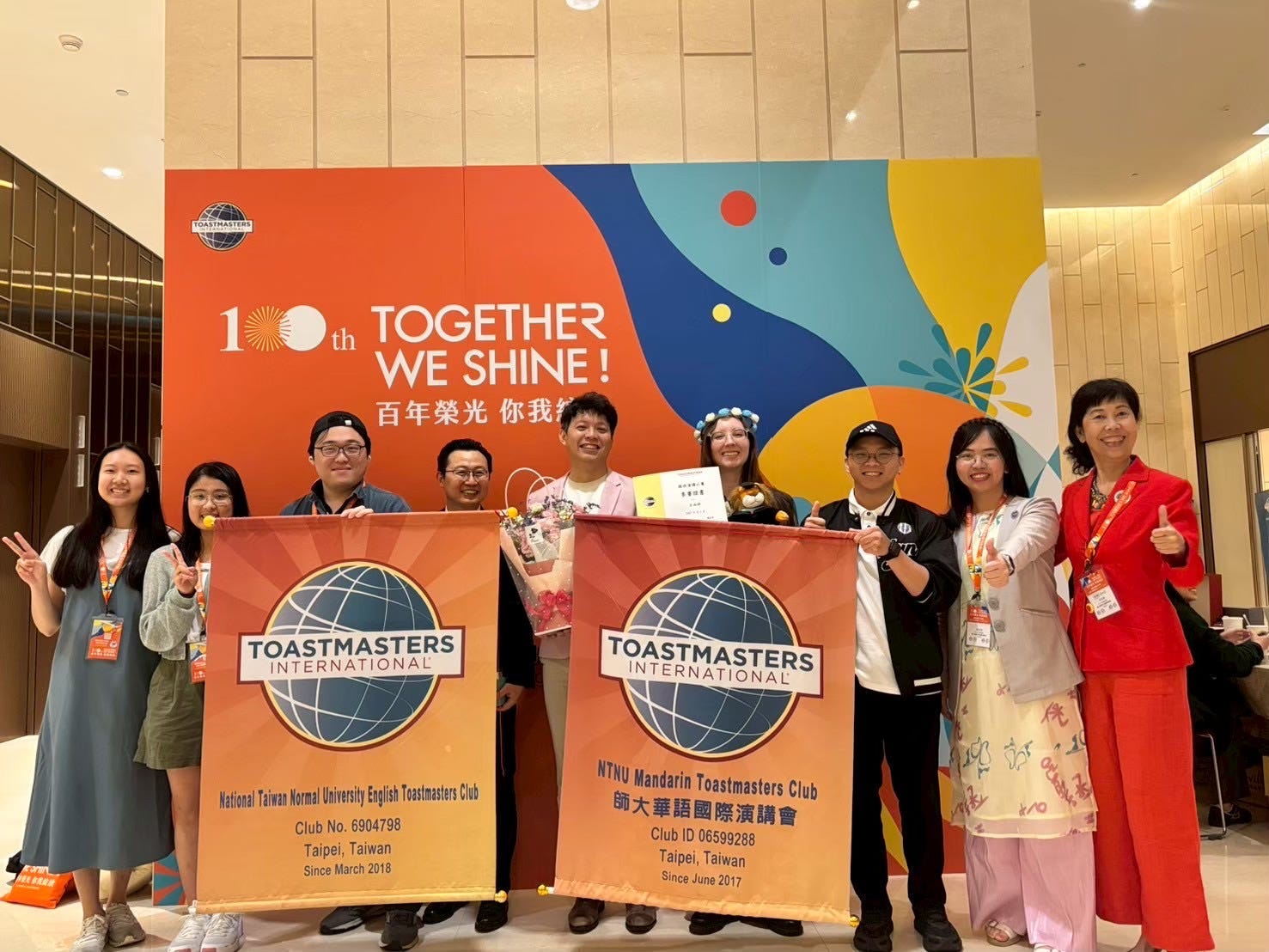
While going to graduate school in Taiwan, I joined the NTNU Mandarin Toastmasters club on campus to improve my Mandarin speaking skills. In early 2025, I decided to participate in my first Mandarin speech contest in Taiwan. Little did I know I would end up advancing to the national finals! Out of eight finalists, I was the only non-native speaker at the conference. That experience speaking in front of a crowd of 200+ people significantly reduced my fear of speaking. In my experience, Toastmasters members are some of the kindest people I’ve ever met, and many clubs offer online meetings. I highly encourage Mandarin learners living overseas to reach out to Toastmasters clubs in Mandarin-speaking countries and request to attend online meetings for more speaking opportunities.
Staying motivated can be hard when life is busy. I think what’s most important is to get clear on my priorities. Is Mandarin learning a top priority right now? If not, I give myself permission to take time off. Now that I’ve moved back to the U.S., my priorities are shifting, and Mandarin learning is at the top of my priority list again. Even so, I have trouble motivating myself to get started when the path to near-native fluency feels neverending. I overcome my hesitation by planning out my days in advance.
When I wake up in the morning, I definitely don’t feel like doing what I planned. But I ask myself, “Do you want to be a person who does what she feels like, or a person who does what she intends?” I’m basically choosing between indulging my whims or working toward my dream. When I ask myself that question directly, it’s much easier to work hard to reach my desired outcome.
How has learning Chinese changed your perspective on Chinese-speaking cultures or influenced your personal growth?
Learning Mandarin has been an incredible journey so far. I’ve met so many passionate and energetic people who are striving to get what they want out of life. I’ve learned tons about Mandarin-speaking cultures, but probably the most important lesson I’ve learned is that we’re all way more similar than we realize. Living in Taiwan, I was touched countless times by the kindness of strangers. I faced immense challenges, but when I sought help, it was always available to me. People are eager to help and do what they can.
At times, my home culture can be somewhat cynical and focused on the negative, whereas I’ve found that Taiwanese social interactions are really about keeping things positive. There can be downsides to either approach, but the takeaway for me is that humans have both capacities. Sometimes we just need a shift in perspective to help us see the events of our lives in a different light. This realization has been extremely empowering for me.
What are your favorite aspects of the Chinese language or culture?
Back in 2018, when I first arrived in Taiwan, I watched The Rap of China on the Chinese streaming platform iQIYI. That show sparked my interest in Mandarin rap music. Years later, I watched Taiwan’s rap competition show The Rappers and ended up researching Taiwanese hip hop culture during graduate school.
My first year in Taiwan was really tough. I didn’t have any friends when I first arrived, and I was pretty lonely. But that dream of learning Mandarin kept propelling me forward every day. The song《你能看到我》by 黃旭 and 艾熱 has retained a special meaning for me since that period. The chorus of the song uses relatively simple language, so it was easy to learn as a beginner, but it also has a strong message.
你會看到我 一直都還在
不管他們多冷漠一直都還在
讓每個現場著了火一直都還在
從不辜負你期待 因為我一直會在
而且帥
I relate to this song because it’s about the artist grinding in silence and obscurity, never giving up, until one day that hard work pays off and he blows everyone away with his mad skills. Not to mention, he does it all with style. That’s inspiring to me, and it’s what I want my own story to be about.
What advice would you give to learners who are at the intermediate level and want to reach advanced fluency?
I need to preface this by saying, I am very privileged, and I was fortunate enough to receive one of the few scholarships available each year to study Mandarin in Taiwan. Not every learner will have the same opportunities I’ve had. Still, I encourage every interested learner to apply.
One of the most important things you can do to set yourself up to achieve advanced fluency is to spend the time learning how to write characters. This sounds counterintuitive to many people because “nobody writes anymore,” and some people just want to be able to have conversations. In my experience, however, since Mandarin has so many homophones, if you can’t picture a character in your head when you hear it, you are not going to be able to confidently follow advanced topics. Writing is an invaluable way to memorize characters and the subtle details that differentiate them. After writing a character over and over again, your hand remembers how to write it, and your mind’s eye can recognize and recall that character with ease.
Beyond this, my advice is to try, as much as possible, to learn intensively. This can be hard when you have a full time job, for example, and you only have an hour or two per day to learn. But there are ways you can learn smarter and get the most out of your time. One way to do this is, after learning something new, turn around and teach somebody else. For example, you can create a YouTube channel or recruit a friend to learn together. This can reinforce your learning and improve retention. The key is to maintain forward momentum and retain what you learn from one day to the next. If you take long breaks between sessions, your progress can disintegrate quickly. Spaced repetition flashcards can also help keep older lessons top-of-mind.
My teacher at MTC once used the analogy of “making a trail through a grassy field” to describe the process of learning a new language. If you tread the same trail daily, it gradually becomes more and more visible and easier to traverse. But every day you don’t tread the trail, the grass starts growing again. During the beginner and intermediate stages, if you don’t regularly review what you’ve learned, the neural pathways you’ve built start to disappear.
Transcending the cusp between intermediate and advanced fluency requires a lot of energy. One major benefit of reaching an advanced level (C1+) is that once we get there, we are much less likely to forget what we have learned. At this level, we can consume the same texts that educated native speakers are consuming, and that’s where the real fun begins, because we get to make the language our own. We can discover our favorite authors, filmmakers, and creators. If we follow our curiosity, the process of discovery becomes an upward spiral that propels us further and further ahead. So, there are a lot of rewards to be claimed by those who put in the work to get here. Achieving advanced fluency is difficult, but it is worth it.
Are there some common misconceptions about the language that you believe are not true?
I personally disagree that learning Mandarin with Taiwan’s Zhuyin Fuhao (bopomofo) phonetic system leads to better pronunciation than learning with Hanyu Pinyin. Level 0 Mandarin classes teach the proper sounds for the Latin alphabet as used in Hanyu Pinyin, and learning those sounds is a fundamental part of learning Mandarin, regardless of the phonetic representations used. Therefore, I don’t believe these systems have any bearing on pronunciation. That being said, I do recommend learning Zhuyin, because it’s cool, and it makes typing faster 🙂
Connect with Taylor!
Website: www.taylorfinney.com