

China's Curious Mango Cult
How the fruit became an unlikely symbol of Maoism 🥭


Word of the week: 芒果崇拜 (mángguǒ chóngbài)
Meaning: Mango Cult or Mango Worship
The Cultural Revolution stands as one of the most turbulent chapters in China’s modern history — a time of political fanaticism and the systematic destruction of traditional culture. Yet amid the chaos, it also gave rise to some of the strangest and most unexpected cultural phenomena. One of the most curious was the so-called “mango cult.”
In the late 1960s, this golden fruit briefly became a revolutionary icon — venerated almost like Chairman Mao himself. Remarkably, the entire craze began from a single coincidence.
Let’s explore how China’s extraordinary “mango cult” came to be:
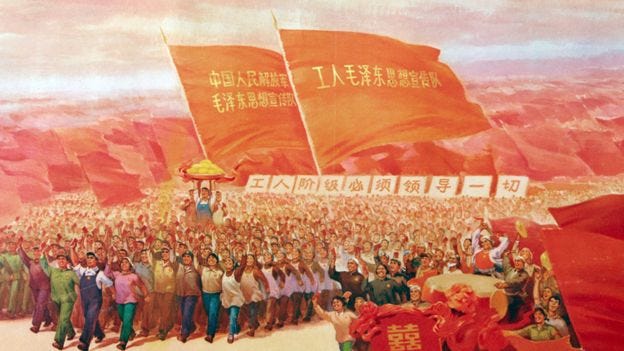
1967年底,已是文化大革命横扫中国的第二个年头了,全国濒临彻底失控的局面。1968年夏,这位独裁者派遣大约三万名身上仅带着红宝书的工人,进驻此前由红卫兵控制的清华大学。五名工人丧生,数百人受伤,但工人人数过于庞大,使大学生们不久便缴械投降。
文化大革命 (Wénhuà Dàgémìng) — Cultural Revolution
横扫 (héngsǎo) — to sweep across, to engulf
濒临 (bīnlín) — to be on the verge of, to be close to
失控 (shīkòng) — out of control
局面 (júmiàn) — situation, state of affairs
独裁者 (dúcáizhě) — dictator
派遣 (pàiqiǎn) — to dispatch, to send
红宝书 (hóngbǎoshū) — “Little Red Book” (Quotations from Chairman Mao)
进驻 (jìnzhù) — to station in, to move into (a location)
红卫兵 (Hóngwèibīng) — Red Guards
控制 (kòngzhì) — to control, to dominate
清华大学 (Qīnghuá Dàxué) — Tsinghua University
丧生 (sàngshēng) — to die, to be killed
缴械投降 (jiǎoxiè tóuxiáng) — to lay down arms and surrender
By the end of 1967, the Cultural Revolution had already swept across China for two years, and the entire country was on the verge of total chaos. In the summer of 1968, the dictator dispatched around 30,000 workers—armed only with their Little Red Books—to enter Tsinghua University, which had previously been under Red Guard control. Five workers were killed and hundreds were injured, but the workers’ overwhelming numbers soon forced the students to surrender.

凑巧的是,工宣队攻下清华之后一个星期,巴基斯坦外长访问北京。作为礼物,他送给伟大领袖一篮黄色的芒果。毛泽东想到一个主意,事后的发展表明,这个主意——可能并非预设地——取得了非常成功的宣传效果。毛泽东把那大约40个当时在中国还鲜为人知的水果送给了刚刚征服清华大学的工宣队。
凑巧 (còuqiǎo) — coincidentally, by chance
工宣队 (gōngxuānduì) — workers’ propaganda team (sent to schools during the Cultural Revolution)
攻下 (gōngxià) — to capture, to take over (by force)
巴基斯坦 (Bājīsītǎn) — Pakistan
外长 (wàizhǎng) — foreign minister
访问 (fǎngwèn) — to visit (officially)
篮 (lán) — basket
芒果 (mángguǒ) — mango
预设 (yùshè) — preset, prearranged
鲜为人知 (xiān wéi rén zhī) — little known, rarely known
征服 (zhēngfú) — to conquer, to take by force
Coincidentally, about a week after the Workers’ Propaganda Team had taken over Tsinghua, the foreign minister of Pakistan visited Beijing. As a gift, he presented the Great Leader with a basket of yellow mangoes. Mao Zedong came up with an idea which—though perhaps not initially intended—proved to be an extraordinarily effective piece of propaganda. He gave those roughly forty mangoes, a fruit still little known in China at the time, to the workers’ team that had just “conquered” Tsinghua University.
毛泽东的保健医生李志绥当时正在北京针织总厂。他在其回忆录中写道:“工厂工人举行一个盛大的欢迎芒果仪式,唱颂着毛语录的警句,然后把芒果用蜡封起来保存,以便传给后世子孙。芒果被供奉在大厅的坛上。”
针织总厂 (zhēnzhī zǒngchǎng) — knitting factory, textile mill
回忆录 (huíyìlù) — memoir, recollection
举行 (jǔxíng) — to hold (a ceremony, meeting, event)
盛大 (shèngdà) — grand, magnificent
欢迎仪式 (huānyíng yíshì) — welcoming ceremony
颂 (sòng) — to praise, to chant in praise
毛语录 (Máo yǔlù) — Quotations from Chairman Mao (Mao’s sayings)
警句 (jǐngjù) — aphorism, maxim, famous saying
蜡 (là) — wax
封起来 (fēng qǐlái) — to seal up, to enclose
保存 (bǎocún) — to preserve, to keep
后世子孙 (hòushì zǐsūn) — future generations, descendants
供奉 (gòngfèng) — to enshrine, to place for worship
坛 (tán) — altar, pedestal
Mao Zedong’s personal physician, Li Zhisui, was at the Beijing Knitting Factory at the time. In his memoirs, he wrote:
“The factory workers held a grand ceremony to welcome the mangoes, chanting quotations from Mao’s Little Red Book. They then sealed the mangoes in wax to preserve them for future generations. The mangoes were enshrined on an altar in the main hall.”

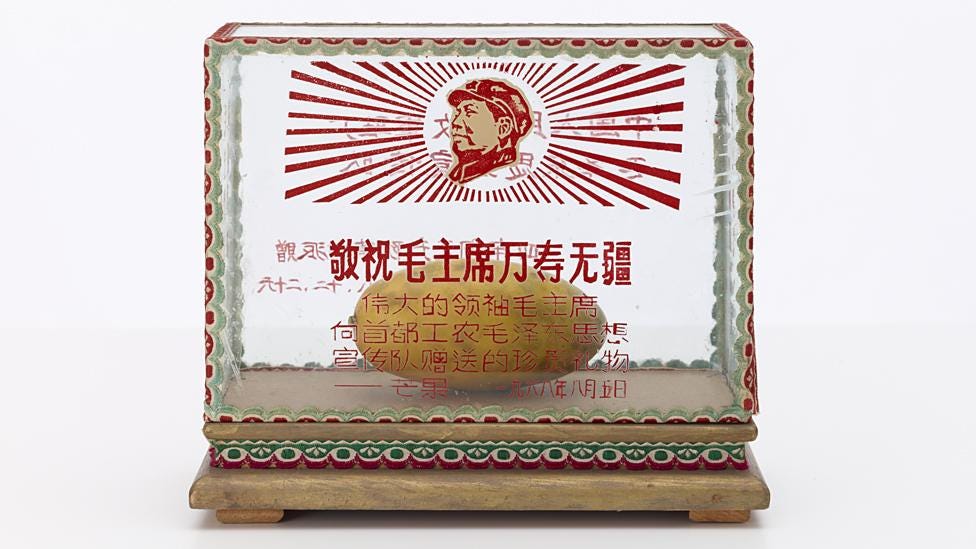
没过多久,全中国都开始崇拜芒果,全国各地都举行类似宗教仪式一样的活动:人们手捧装在玻璃神龛里如同圣物一般的仿真芒果,列队走过大街小巷;工人们向摆放在神坛上的芒果鞠躬致敬。文化大革命中,宗教文物虽然被毁,但人们的宗教感情却并不是那么容易被消除的。
崇拜 (chóngbài) — to worship, to revere
宗教仪式 (zōngjiào yíshì) — religious ceremony, ritual
手捧 (shǒu pěng) — to hold reverently in both hands
玻璃神龛 (bōli shénkān) — glass shrine, glass altar case
圣物 (shèngwù) — sacred object, holy relic
仿真 (fǎngzhēn) — imitation, lifelike replica
列队 (lièduì) — to line up, to form ranks
神坛 (shéntán) — altar, shrine
鞠躬致敬 (jūgōng zhìjìng) — to bow and pay respect
宗教文物 (zōngjiào wénwù) — religious relics, artifacts
被毁 (bèi huǐ) — to be destroyed
Before long, the entire nation began to worship the mango. Across China, ceremonies resembling religious rituals were held: people carried imitation mangoes enclosed in glass shrines as if they were sacred relics, parading through the streets; workers bowed reverently to mangoes placed on altars. During the Cultural Revolution, religious artifacts may have been destroyed—but people’s religious sentiments were not so easily erased.
不久,生产线上也有了芒果的影子:芒果搪瓷杯、芒果被面、芒果口味的烟等等,花样繁多。国家宣传部门也很快跟进。党报《人民日报》发表了一首诗,诗中写道:“见到那金色的芒果啊,就好像见到了伟大领袖毛主席;站在那金色的芒果面前啊,就好像站在毛主席身旁。一次又一次地摸着那金色的芒果啊,金色的芒果多么暖!一次又一次地闻着那金色的芒果啊,金色的芒果多么香!”
生产线 (shēngchǎn xiàn) — production line
影子 (yǐngzi) — shadow, trace, presence
搪瓷杯 (tángcí bēi) — enamel cup
被面 (bèimiàn) — quilt cover
花样繁多 (huāyàng fánduō) — rich in variety, diverse in form
党报 (dǎngbào) — Party newspaper (official Party publication)
人民日报 (Rénmín Rìbào) — People’s Daily (official newspaper of the Chinese Communist Party)
诗 (shī) — poem
摸着 (mōzhe) — to touch, to stroke
闻着 (wénzhe) — to smell
多么 (duōme) — how (used for emphasis: “how warm,” “how fragrant”)
Soon, mangoes began to appear on production lines as well: enamel cups with mango designs, mango-patterned quilts, even mango-flavored cigarettes — in all sorts of varieties. The state propaganda apparatus quickly followed suit. The Party newspaper People’s Daily published a poem that read:
“When we see the golden mango, it’s as if we are seeing our Great Leader Chairman Mao;
Standing before the golden mango, it feels as though we are standing beside Chairman Mao.
Again and again we touch the golden mango — how warm it is!
Again and again we smell the golden mango — how fragrant it is!”

一年多以后,崇拜芒果的热潮渐渐冷了下来,蜡芒果后来也被当成蜡烛用了,芒果不再神圣。当毛泽东已重病缠身时,其夫人江青曾试图再次掀起芒果崇拜热。她指示拍摄名为《芒果之歌》的故事片。但影片还没完成,毛泽东就过世了。首映那周,江青被捕,视频停放。文化大革命、对毛泽东的崇拜、对芒果的崇拜,也就到此为止了。
热潮 (rècháo) — craze, wave of enthusiasm
渐渐 (jiànjiàn) — gradually, slowly
神圣 (shénshèng) — sacred, holy
重病缠身 (zhòngbìng chánshēn) — to be seriously ill, to be bedridden
夫人 (fūrén) — wife, madam
江青曾 (Jiāng Qīng) — Jiang Qing, wife of Mao Zedong
掀起 (xiānqǐ) — to stir up, to set off
指示 (zhǐshì) — to instruct, to give orders
拍摄 (pāishè) — to shoot (a film or photo)
故事片 (gùshìpiàn) — feature film, narrative film
过世 (guòshì) — to pass away, to die
首映 (shǒuyìng) — premiere, first showing
被捕 (bèibǔ) — to be arrested
停放 (tíngfàng) — to shelve, to put aside (here: stop release or screening)
到此为止 (dàocǐ wéizhǐ) — to end here, to come to an end
A little over a year later, the fervor of mango worship gradually faded. The wax mangoes were eventually used as candles, and the mango lost its sacred aura. When Mao Zedong was already gravely ill, his wife Jiang Qing tried to revive the mango cult once again. She ordered the production of a feature film titled “The Song of the Mango”. But before the film could be completed, Mao passed away. The week it was set to premiere, Jiang Qing was arrested, and the project was shelved.
Thus ended the Cultural Revolution—and with it, the worship of Mao Zedong and of the mango.
Thank you for reading Mandarin Zest. We love to read Chinese with you and want to continue in the future. Please consider pledging to help us write the weekly posts and more! Any pledge, montly or yearly, would be very helpful. 谢谢
Antoine & Dorota
Referenced author’s: Christoph Ricking